
Introduction
Accidents and medical emergencies can happen anywhere—at home, at work, on the road, at school, or during outdoor activities. In many situations, the first few minutes after an injury or sudden illness are the most important. Knowing basic first aid can help protect a person’s life, prevent a condition from becoming worse, and support recovery until professional medical help arrives.
First aid is not a substitute for professional medical treatment. Instead, it is the immediate care given to someone who is injured or becomes suddenly ill before emergency medical services or healthcare professionals take over. Every person, regardless of age or occupation, can benefit from learning these essential life-saving skills.
This guide explains the fundamentals of first aid, how to respond to common emergencies, what should be included in a first aid kit, and how to stay calm during an emergency.
What Is First Aid?
First aid is the immediate assistance provided to someone who has been injured or has suddenly become ill.
The main goals of first aid are to:
- Preserve life
- Prevent the condition from worsening
- Promote recovery
- Keep the injured person comfortable until medical help arrives
Quick and appropriate action can make a significant difference during an emergency.
Stay Calm and Assess the Situation
Before helping someone, remain calm and quickly assess the situation.
Ask yourself:
- Is the area safe?
- Is the person conscious?
- Are there any immediate dangers?
- Do emergency services need to be contacted?
Never put yourself at risk while trying to help another person.
Call for Emergency Medical Help
Contact your local emergency medical services immediately if someone has:
- Difficulty breathing
- Severe chest pain
- Heavy bleeding
- Loss of consciousness
- Severe burns
- Seizures
- Suspected stroke
- Serious head injury
- Broken bones with severe deformity
- Severe allergic reactions
Provide clear information about:
- Your location
- The person’s condition
- The number of injured people
- Any immediate dangers
Remain on the line if instructed by the emergency operator.
First Aid for Cuts and Bleeding
Minor cuts usually heal with simple care, while severe bleeding requires immediate attention.
For Minor Cuts
- Wash your hands.
- Clean the wound with clean water.
- Apply gentle pressure if bleeding.
- Cover with a sterile bandage.
- Keep the wound clean.
For Severe Bleeding
- Apply firm pressure using a clean cloth or bandage.
- Keep pressure on the wound.
- If possible, raise the injured limb above the level of the heart.
- Do not remove deeply embedded objects.
- Seek emergency medical care immediately.
Treating Burns
Burns may result from heat, hot liquids, chemicals, electricity, or sunlight.
For Minor Burns
- Cool the burn under cool (not ice-cold) running water for about 20 minutes.
- Remove tight jewelry if possible before swelling develops.
- Cover with a clean, non-stick dressing.
Avoid
- Applying butter or oils
- Breaking blisters
- Using ice directly on the burn
Serious burns require immediate medical attention.
Nosebleeds
Nosebleeds are common and usually not serious.
What to Do
- Sit upright.
- Lean slightly forward.
- Pinch the soft part of the nose continuously for about 10–15 minutes.
- Breathe through the mouth.
Avoid tilting the head backward, as this may cause blood to flow into the throat.
Choking
Choking occurs when an object blocks the airway.
Signs of Choking
- Inability to speak
- Difficulty breathing
- Silent coughing
- Blue lips or face
- Grabbing the throat
If a person cannot breathe or speak, call emergency medical services immediately. If you are trained in first aid, provide appropriate assistance according to recognized first aid guidelines until professional help arrives.
Fainting
A person may faint due to dehydration, low blood sugar, stress, or other medical conditions.
What to Do
- Help the person lie down.
- Raise their legs slightly if appropriate.
- Loosen tight clothing.
- Ensure fresh air is available.
- Monitor breathing.
If the person does not quickly regain consciousness or has additional symptoms, seek emergency medical care.
Sprains and Strains
Sprains affect ligaments, while strains affect muscles or tendons.
Initial Care
A commonly used approach includes:
- Rest
- Ice wrapped in a cloth
- Compression with an elastic bandage
- Elevation of the injured area
If pain is severe or the person cannot bear weight, seek medical evaluation.
Suspected Broken Bones
Signs may include:
- Severe pain
- Swelling
- Bruising
- Deformity
- Inability to move the limb
First Aid Tips
- Keep the injured area still.
- Do not attempt to straighten the bone.
- Support the injured limb if possible.
- Apply a cold pack wrapped in cloth to reduce swelling.
- Seek immediate medical care.
Heat Exhaustion and Heatstroke
Hot weather can lead to heat-related illnesses.
Heat Exhaustion Symptoms
- Heavy sweating
- Weakness
- Dizziness
- Nausea
- Muscle cramps
Move the person to a cool place, offer water if they are alert, and cool the body with damp cloths.
Heatstroke Warning Signs
- Very high body temperature
- Confusion
- Loss of consciousness
- Hot, dry skin or altered sweating
Heatstroke is a medical emergency and requires immediate emergency medical services.
Recognizing Stroke Symptoms
A stroke occurs when blood flow to part of the brain is interrupted.
Remember the FAST warning signs:
- F – Face drooping
- A – Arm weakness
- S – Speech difficulty
- T – Time to call emergency medical services immediately
Early treatment greatly improves outcomes.
Heart Attack Warning Signs
Common symptoms include:
- Chest pressure or pain
- Pain spreading to the arm, shoulder, neck, jaw, or back
- Shortness of breath
- Sweating
- Nausea
- Dizziness
Call emergency medical services immediately if a heart attack is suspected.
Allergic Reactions
Mild allergic reactions may cause:
- Itching
- Rash
- Sneezing
- Watery eyes
Severe allergic reactions (anaphylaxis) may include:
- Swelling of the face or throat
- Difficulty breathing
- Severe dizziness
- Loss of consciousness
Anaphylaxis is a medical emergency and requires immediate emergency care.
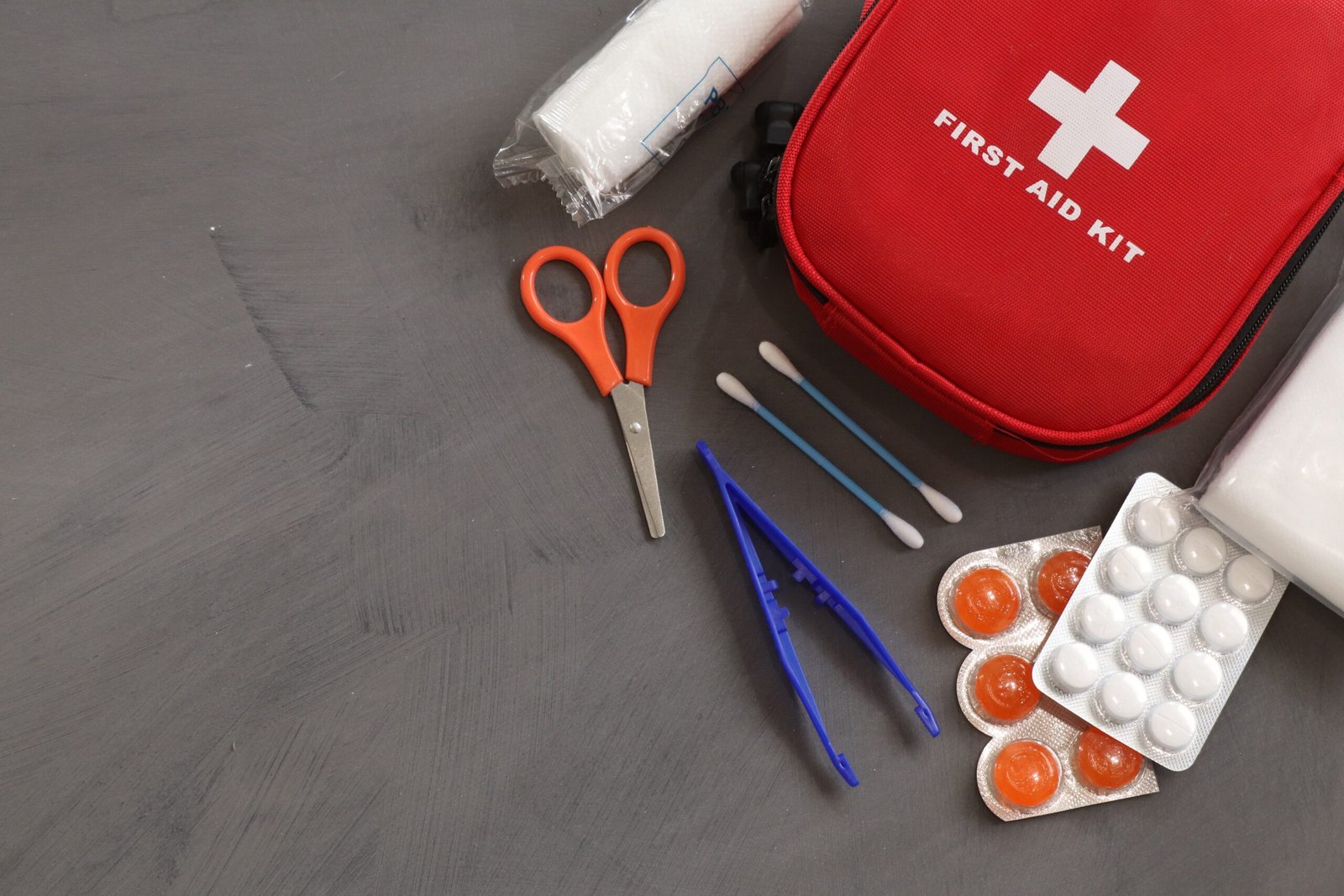
Building a Home First Aid Kit
Every home should have a well-stocked first aid kit.
Basic supplies include:
- Adhesive bandages
- Sterile gauze pads
- Medical tape
- Elastic bandage
- Antiseptic wipes
- Disposable gloves
- Scissors
- Tweezers
- Digital thermometer
- Instant cold packs
- CPR face shield (if available)
- Emergency contact numbers
- Flashlight
- Pain relievers (used according to label directions)
Check expiration dates regularly and replace used or expired items.
Preventing Common Injuries
Simple precautions can help reduce accidents.
At Home
- Keep floors dry.
- Store medicines safely.
- Install smoke detectors.
- Keep sharp objects out of children’s reach.
Outdoors
- Wear sunscreen.
- Stay hydrated.
- Use protective sports equipment.
- Follow traffic safety rules.
At Work
- Use proper lifting techniques.
- Wear appropriate safety equipment.
- Follow workplace safety procedures.
Learning CPR
Cardiopulmonary resuscitation (CPR) is an important emergency skill that can help save lives in certain situations.
Because proper CPR technique requires hands-on instruction, consider taking a certified first aid and CPR course from a recognized organization. Formal training helps you respond more confidently during emergencies.
Common First Aid Mistakes to Avoid
Avoid these common errors:
- Panicking
- Moving someone with a suspected spinal injury unless necessary for safety
- Applying ice directly to burns
- Giving food or drink to an unconscious person
- Ignoring serious symptoms
- Delaying emergency medical care
When in doubt, seek professional medical assistance.
Final Thoughts
Knowing basic first aid can make a critical difference during emergencies. While first aid is not a replacement for professional medical care, it provides immediate support that can help preserve life, reduce complications, and improve recovery until trained healthcare providers arrive.
Learning how to respond calmly to cuts, burns, bleeding, choking, sprains, fractures, heat-related illnesses, heart attacks, strokes, and allergic reactions is a valuable life skill. Consider taking a certified first aid course to build your confidence and practical skills. By staying prepared and keeping a well-stocked first aid kit at home, you can help protect yourself, your family, and your community during unexpected emergencies.
Leave a Reply